
Local SEO Tips for Small Businesses in 2026
1.Introduction: Understanding Local SEO in 2026
Local SEO is the process of improving your online presence so your business appears when people search for services near their location. In 2026, local search is how most customers find small businesses.
When someone searches on Google, they usually want quick and nearby solutions. Local SEO helps Google understand where your business is, what you offer, and why it should show your business to nearby users.
If your local SEO is done right, your business can appear at the top of search results, even above big brands.

What Is Local SEO?
Local SEO focuses on helping your business show up in searches that include a location or local intent.
Examples of local searches:
- “coffee shop near me”
- “dentist in my area”
- “best digital marketing agency in Hyderabad”
Local SEO uses signals like:
- Your business location
- Google Business Profile
- Local keywords
- Reviews and ratings
- Local links and citations
The goal is simple: bring nearby customers to your business.
How Local SEO Is Different From Organic SEO
Local SEO and organic SEO work together, but they serve different purposes.
Local SEO
- Targets customers in a specific city or area
- Focuses on Google Maps and local listings
- Uses location-based keywords
- Drives foot traffic and local calls
Organic SEO
- Targets a wider or global audience
- Focuses mainly on website rankings
- Uses general keywords
- Drives website traffic from anywhere
For small businesses, local SEO usually delivers faster and more relevant results than organic SEO alone.
Why Local SEO Matters More Than Ever in 2026
Local SEO has become more important because of how people search today.
In 2026:
- Most searches happen on mobile phones
- People trust businesses with good local reviews
- “Near me” searches continue to grow
- Customers expect instant and accurate results
Google now prioritizes businesses that are:
- Close to the searcher
- Well-reviewed
- Actively managed
- Locally relevant
If your business ignores local SEO, it becomes invisible to nearby customers.
How Google Shows Local Results in 2026
Google uses multiple formats to display local results. Understanding these helps you optimize better.
1. Google Map Pack (Local Pack)
This is the top section that shows:
- A map
- Three local business listings
- Reviews, ratings, and contact details
Most users click on businesses shown in the Map Pack.
2. Local Organic Results
These are regular website listings that appear below the Map Pack.
Google ranks these based on:
- Website content
- Local keywords
- SEO quality
- Location relevance
3. AI Overviews and Local Summaries
In 2026, Google uses AI to summarize the best local options.
These summaries are based on:
- Reviews
- Popularity
- Proximity
- Trust signals
Businesses with strong local SEO have a higher chance of being featured in AI-driven results.
2. Why Local SEO Is Critical for Small Businesses in 2026
Local SEO is no longer a “nice-to-have” strategy. In 2026, it is one of the most important growth tools for small businesses. Customers now depend on local search results to decide where to go, whom to trust, and what to buy.
If your business is not visible in local search, you are losing customers every single day.
Changing Consumer Behavior and “Near Me” Searches
The way people search has changed completely.
Today, customers search like this:
- “restaurant near me”
- “best salon near my location”
- “repair service open now”
These searches show strong buying intent. The user is ready to take action.
Google understands this behavior and gives priority to businesses that are:
- Close to the user
- Well-optimized locally
- Active and trustworthy
Local SEO helps your business appear exactly when customers are ready to buy.
Mobile-First and Voice-First Local Searches
In 2026, most local searches will happen on mobile phones and voice assistants.
People use:
- Smartphones while traveling
- Voice search while driving
- Smart assistants for quick answers
Voice searches are more natural and conversational, such as:
- “Where is the nearest bakery?”
- “Which clinic is open now near me?”
Local SEO helps Google understand these queries and match them with your business.
If your website and Google Business Profile are not optimized for mobile and voice search, you miss a large share of local customers.
Trust, Visibility, and Conversions From Local Search
Local search builds instant trust.
When users see your business in:
- Google Map Pack
- Top local results
- AI-generated local summaries
They trust your business more.
Reviews, ratings, photos, and accurate information help customers decide faster. This leads to:
- More calls
- More visits
- More sales
Local SEO doesn’t just bring traffic. It brings high-quality customers who are ready to convert.
What Happens When Small Businesses Ignore Local SEO
Ignoring local SEO has serious consequences.
Without local SEO:
- Your competitors take your customers
- Your business becomes invisible on Google
- Paid ads become more expensive
- Customers lose trust in outdated listings
Even if you provide great service, customers can’t choose you if they can’t find you.
In 2026, not doing local SEO is a business risk.
3. How Local SEO Has Evolved: Trends to Watch in 2026
Local SEO in 2026 is very different from what it was a few years ago. Google no longer shows results only based on keywords. It now focuses on intent, behavior, location, and trust.
Understanding these trends helps small businesses stay ahead of competitors and adapt early.
AI-Powered Local Search Results
Artificial Intelligence now plays a big role in local search.
Google uses AI to:
- Understand search intent better
- Analyze reviews and user behavior
- Recommend the most relevant local businesses
Instead of showing long lists, Google highlights the best local options. Businesses with strong profiles, real reviews, and accurate data are favored by AI.
Local SEO in 2026 is not about tricks. It is about quality, consistency, and real-world relevance.
Voice Search and Conversational Queries
Voice search continues to grow every year.
People speak differently than they type. Voice searches are:
- Longer
- More natural
- Question-based
Examples:
- “Which is the best café near me?”
- “Is there a clinic open now in my area?”
To stay visible, businesses must optimize for conversational keywords, FAQs, and natural language. Local SEO now focuses on how people talk, not just how they type.
Hyper-Local and Service-Area Searches
In 2026, search results are more location-specific than ever.
Google shows results based on:
- Neighborhood
- Street
- Landmark proximity
Service-area businesses, such as plumbers or delivery services, benefit from this trend. Even without a physical store, they can rank by clearly defining service locations.
Hyper-local optimization helps businesses reach customers closest to them, increasing conversion chances.
Personalized Local Results
Local search results are now personalized.
Google considers:
- User location
- Search history
- Past interactions
- Device type
Search results may vary between users for the same query.
For businesses, this makes it important to:
- Stay active on Google Business Profile
- Collect positive reviews
- Update information regularly
Consistency helps your business appear across different user searches.
Zero-Click Searches and AI Summaries
Many local searches now end without a website visit.
Google provides:
- Quick answers
- Business details
- Directions and call buttons
- AI-generated summaries
These are called zero-click searches.
Even without website clicks, your business can still get:
- Calls
- Visits
- Leads
That’s why optimizing Google Business Profile and local listings is just as important as website SEO in 2026.
4: How to Optimize Your Google Business Profile for Maximum Visibility
In 2026, Google Business Profile has become the foundation of local SEO. When this profile is ignored or only partially filled, businesses often disappear from local search results even if they offer great services.
A properly optimized profile helps Google clearly identify your business as legitimate, active, and relevant. This makes it easier for your listing to appear in front of nearby customers at the moment they are searching for solutions.
What Is Google Business Profile and Why It Matters
Google Business Profile is a free platform that controls how your business information appears on:
- Google Search
- Google Maps
It displays essential details like your location, contact number, working hours, customer ratings, images, and services. This information helps potential customers quickly understand who you are and whether your business fits their needs.
How Google Business Profile Influences Local Rankings
Google uses your Business Profile as a core signal to decide which businesses deserve visibility in local search.
An updated and active profile helps Google recognize:
- What your business actually does
- Where you operate or serve customers
- How credible your business appears based on reviews and activity
Businesses that keep their profiles accurate and active usually outperform competitors with neglected or outdated listings.
Map Pack Visibility Explained
The Google Map Pack showcases three local businesses at the top of location-based searches.
Google determines these results using:
- Relevance how useful your business is for that search
- Distance how near your business is to the user’s location
- Prominence signals like reviews, engagement, and overall reputation
Strengthening your Google Business Profile improves your chances of earning a spot in this highly competitive area.
Step-by-Step Guide to Setting Up Google Business Profile
A correct setup is the starting point for long-term local SEO success.
Business Name, Address, and Phone Number (NAP)
Follow these best practices:
- Use your registered business name only
- Enter an accurate and complete address
- Add a local contact number
- Keep the same details across all online platforms
Consistency across the web helps Google verify and trust your business information.
Service Areas vs Physical Locations
If customers visit your location:
- Display your full business address
- Enable walk-in visits
If you travel to customers:
- Set defined service areas
- Hide your physical address if necessary
Choosing the right option ensures your business appears in searches that truly match how you operate.
Optimizing Key Google Business Profile Features
Every section inside your profile contributes to better visibility and higher customer engagement.
Business Description Optimization
Your description should:
- Clearly explain your services or products
- Naturally include location-based terms
- Focus on solving customer problems
Avoid forced keywords. Clear, human-friendly language works best.
Choosing the Right Categories
Categories tell Google what type of business you run.
Best practices:
- Select the most accurate main category
- Add only relevant secondary categories
- Skip categories that don’t truly apply
Correct categorization improves how often your business appears for the right searches.
Attributes and Services
Attributes highlight helpful features like:
- Accessibility options
- Internet availability
- Online booking
Service listings explain what you offer in detail, helping customers decide faster without extra research.
Adding Photos and Videos
Visual content builds credibility and encourages interaction.
Best practices:
- Upload real photos of your business
- Include staff, workspace, products, and signage
- Refresh images regularly
Active photo updates often lead to higher clicks and customer actions.
Posting Updates and Offers
Google Business Profile allows regular posting of:
- Promotions
- Events
- Announcements
- Business updates
Consistent posting shows Google that your business is active, which can positively influence local search visibility.
5 . Local Keyword Optimization for Small Businesses
Local keyword optimization helps Google understand where your business operates and who should see your business. In 2026, using the right local keywords is one of the strongest signals for local search rankings.
When done correctly, local keywords connect your business with customers who are ready to take action.
What Are Local Keywords and Why They Matter
Local keywords are search terms that include a location or local intent.
These keywords tell Google that the user wants a service near them, not anywhere in the world.
Location-Based Intent Explained
Local intent means the user is looking for:
- A nearby service
- A local store
- A business in a specific city or area
Google prioritizes businesses that clearly match this intent.
Examples of Local Keywords
Here are some simple examples:
- “digital marketing agency in Hyderabad”
- “best café near me”
- “plumber in Kukatpally”
- “local SEO services in my area”
These keywords usually convert better because the user is already interested in buying or visiting.
How to Do Local Keyword Research in 2026
Finding the right local keywords does not need to be complicated.
Google Auto-Suggest
Start typing your service in Google and watch the suggestions.
Example:
- Type “dentist in”
- Google may suggest city or area-based keywords
These suggestions come from real user searches.
Google Business Profile Insights
Google Business Profile shows:
- What keywords people use to find you
- How many searches lead to calls or visits
This data helps you understand real local demand.
Competitor Keyword Analysis
Check which keywords your local competitors are ranking for.
Look at:
- Their website titles
- Google Business Profile descriptions
- Blog topics
This helps you discover keyword opportunities you may have missed.
Tools for Local Keyword Research
Some useful tools include:
- Google Keyword Planner
- Google Search Console
- Local SEO tools
- Keyword research platforms
Focus on keywords with clear local intent, not just high volume.
How to Use Local Keywords Correctly
Using keywords in the right places is just as important as choosing them.
Website Pages
Add local keywords naturally in:
- Page titles
- Headings
- Meta descriptions
- Page content
Avoid stuffing keywords. Keep it natural and helpful.
Google Business Profile
Use local keywords in:
- Business description
- Services
- Posts
- FAQs
This strengthens your local relevance.
Blogs and FAQs
Blogs help target long-tail local keywords.
Examples:
- “Best plumbing services in [city]”
- “A simple guide to choosing a local SEO service in [location]
FAQs help match voice search and conversational queries.
Location Pages
If you serve multiple areas, create separate pages for each location.
Each page should include:
- Area-specific content
- Local keywords
- Contact details
- Services offered in that location
This improves rankings for multiple local searches.
6: Creating Localized Content That Attracts Nearby Customers
Localized content helps your business connect with people in your area. In 2026, Google favors content that feels relevant to a specific location, not generic or copied.
When your content speaks directly to local customers, it builds trust and improves local rankings.
What Is Localized Content?
Localized content is content created specifically for a city, neighborhood, or service area.
It focuses on:
- Local problems
- Local interests
- Local language and terms
Instead of writing for everyone, you write for people near your business.
Identifying Your Local Target Audience
Before creating content, you need to understand your local audience.
Ask simple questions:
- Who are my local customers?
- What problems do they face?
- What services do they search for?
- When do they usually need help?
Knowing your audience helps you create content that matches real local needs.
Blog Ideas for Local SEO
Blogs are a powerful way to attract local traffic.
Some easy blog ideas include:
- “Best [service] in [city]”
- “How to choose a [service] provider in [location]”
- “Common problems faced by [industry] customers in [city]”
- “Cost of [service] in [location]”
These topics naturally include local keywords and help build authority.
Service Area Pages vs Location Pages
Understanding the difference helps improve local visibility.
Service Area Pages
- Used by businesses that visit customers
- Focus on areas you serve
- Do not require a physical office
Location Pages
- Used by businesses with physical locations
- Focus on store address and directions
- Include maps and local contact details
Choose the right page type based on how your business operates.
Using Local Events, News, and Landmarks
Local references make your content feel real and trustworthy.
You can mention:
- Local festivals or events
- Neighborhood names
- Popular landmarks
- Local news related to your industry
This helps Google and users understand that your business is truly local.
Content Examples Small Businesses Can Use
Here are simple content types you can create:
- Local guides and tips
- Area-specific FAQs
- Customer success stories
- Case studies from nearby clients
- Local announcements or updates
Even small pieces of local content can make a big difference in local SEO.
7 : Ensuring NAP Consistency Across the Web
NAP consistency is one of the most important but often ignored parts of local SEO. In 2026, Google relies heavily on accurate and consistent business information to decide which businesses to trust.
If your NAP details are confusing or inconsistent, your local rankings can drop even if everything else is done well.
What Is NAP (Name, Address, Phone)?
NAP stands for:
- Name – Your official business name
- Address – Your physical or service location
- Phone Number – Your main contact number
This information appears on:
- Your website
- Google Business Profile
- Online directories
- Social media pages
Google compares these details across the web to verify your business.
Why NAP Consistency Matters for Rankings
Google wants to show users accurate local results.
When your NAP details are consistent:
- Google trusts your business more
- Your local rankings improve
- Customers can contact you easily
When details don’t match:
- Google gets confused
- Your visibility drops
- Customers may lose trust
NAP consistency is a strong local ranking signal in 2026.
Common NAP Mistakes to Avoid
Many small businesses make simple but costly mistakes.
Common issues include:
- Using different business names in different places
- Old or incorrect addresses
- Multiple phone numbers without purpose
- Typos and formatting differences
- Duplicate business listings
Even small differences can impact local SEO performance.
How to Audit and Fix NAP Issues
Fixing NAP issues is easier than it sounds.
Steps to follow:
- List your correct business name, address, and phone number
- Search your business name on Google
- Find listings with incorrect information
- Update or request corrections
- Remove duplicate listings
Check your NAP details regularly to keep your local SEO strong.
8 . Building Local Citations and Business Listings in 2026
Local citations help Google confirm that your business is real, active, and trustworthy. In 2026, accurate and high-quality citations are still a strong foundation for local SEO success.
The goal is not to be listed everywhere, but to be listed correctly and consistently.
What Are Local Citations?
Local citations are online mentions of your business’s:
- Name
- Address
- Phone number
“A link to your site isn’t always part of it.”
Google uses citations to verify your business information and location.
Structured vs Unstructured Citations
Structured Citations
- Appear in business directories
- Follow a fixed format
- Examples: business listings, profiles, directory pages
Unstructured Citations
- Appear naturally on blogs, news sites, or forums
- Often mention your business without a formal listing
Both types help strengthen local SEO when information is accurate.
Best Practices for Building Local Citations
Building citations the right way improves rankings and visibility.
Top Directories for Small Businesses
Focus on trusted and popular directories.
Examples include:
- Google Business Profile
- Bing Places
- Business listing platforms
- Local directories relevant to your region
Quality matters more than quantity.
Industry-Specific Directories
Industry directories improve relevance.
Examples:
- Healthcare directories for clinics
- Legal directories for law firms
- Education directories for training institutes
These listings help Google understand what type of business you run.
Bing Places Optimization
Bing Places is often ignored but still important.
Benefits include:
- Extra visibility
- Better presence in voice search
- Less competition than Google
Make sure your Bing listing matches your Google Business Profile exactly.
How to Manage and Monitor Citations
Once citations are created, they must be monitored.
Citation Tools
Citation tools help you:
- Find existing citations
- Identify incorrect information
- Track consistency across platforms
They save time and reduce errors.
Manual vs Automated Submissions
Manual Submissions
- More accurate
- Better for small businesses
- Slower but safer
Automated Submissions
- Faster
- Useful for large-scale listings
- Require regular monitoring
Choose the method that fits your business size and budget.
9: Boost Your Local SEO with Quality Local Backlinks
Local backlinks are links from websites within your city or region that point to your website. In 2026, these links are powerful signals for Google, showing that your business is trusted and relevant to the local community. The more high-quality and locally relevant links you earn, the better your local SEO performance.
Why Local Backlinks Are Important
Think of backlinks as recommendations from other websites. When a local site links to your business, Google interprets it as a vote of confidence.
Benefits of local backlinks include:
- Boosting local search rankings
- Increasing your website’s authority
- Establishing credibility in your community
- Driving traffic from nearby customers
Even a small number of quality local links can have a noticeable impact on your search visibility.
Local Links vs. Generic Links
Not all backlinks are created equal.
Local Backlinks:
- Come from websites in your city or region
- Are highly relevant to your business or industry
- Directly help improve local rankings
Generic Backlinks:
- Come from broader or global websites
- Help overall SEO but have limited local impact
- Are less effective for boosting local search presence
For local SEO, relevance is more important than quantity.
How to Find Local Backlink Opportunities
Local backlinks can be easier to earn than you might think. Look for websites that naturally connect to your business, such as:
- Local business directories or partner websites
- Community blogs and local news outlets
- Event pages and festival websites
- Local associations or chambers of commerce
Focus on opportunities where your business fits logically and adds value.
Guest Posting on Local Blogs
Writing guest posts for local blogs is an effective way to earn backlinks. To do this:
- Share useful tips or advice relevant to your community
- Write articles that help local readers solve problems
- Include a link back to your website naturally
Remember: provide value first, self-promotion second.
Local Partnerships and Sponsorships
Working with other local businesses can earn backlinks while benefiting both parties. Ideas include:
- Collaborating on cross-promotions
- Partnering with vendors or service providers
- Sponsoring local events or teams
- Joining forces for community initiatives
These collaborations often result in website mentions, creating valuable local backlinks.
Getting Backlinks Through Community Involvement
Being active in your community not only builds your reputation but also creates natural linking opportunities. You can:
- Sponsor local events or charities
- Participate in community programs
- Support schools, sports teams, or local causes
- Join neighborhood or business groups
Websites for these programs often list sponsors, participants, or partners giving you organic backlinks while strengthening your local presence.
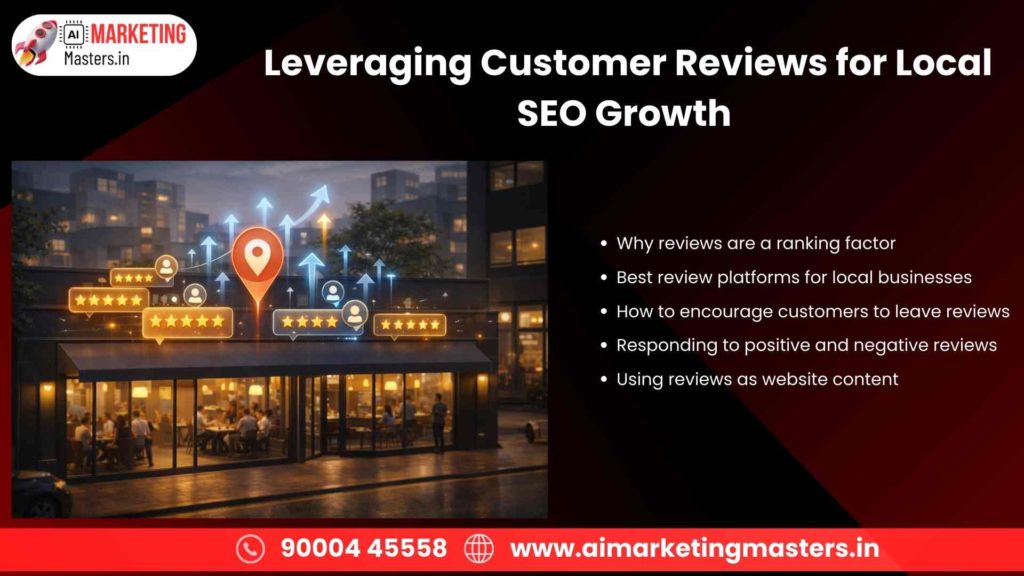
10: Leveraging Customer Reviews for Local SEO Growth
Customer reviews are one of the most powerful ways to build trust in local SEO. In 2026, Google carefully evaluates reviews to determine how reliable and popular a business is in its local area.
Positive reviews don’t just help your rankings, they also influence potential customers, making them more likely to choose your business over competitors.
Why Reviews Influence Local Rankings
Google considers reviews a key ranking factor because they show:
- How trustworthy your business is
- Your popularity in the community
- Customer satisfaction and experiences
Businesses with a steady flow of positive, recent reviews often rank higher in:
- Google Map Pack
- Local search results
- AI-generated local summaries
Reviews also impact click-through rates and can boost customer conversions.
Best Review Platforms for Local Businesses
Not every review site carries the same weight. The most valuable platforms include:
- Google Business Profile (most important for local SEO)
- Industry-specific review websites
- Local business directories
- Social media pages
Focusing on Google reviews first will give your local SEO the biggest advantage.
How to Encourage Customers to Leave Reviews
Most customers are happy to leave a review; they just need a friendly nudge.Easy ways to ask for customer feedback
- Ask in person after a successful service
- Send a follow-up email or text with a review link
- Share a direct link to your review page
- Add a review request on your website
Make it quick and easy for customers to share their experience.
Responding to Reviews
Replying to reviews shows customers and Google that you value feedback.
Positive Reviews:
- Say thank you
- Keep your tone friendly and professional
- Encourage future visits
Negative Reviews:
- Stay calm and polite
- Address the concern honestly
- Offer a helpful solution if possible
Consistently responding to reviews signals engagement and builds trust.
Using Reviews on Your Website
Customer reviews aren’t just for Google they can also boost your website content. You can:
- Add testimonials to product or service pages
- Highlight reviews on landing pages
- Include positive experiences in blog posts
- Showcase customer success stories
Displaying reviews on your website builds credibility and can improve conversion rates.
11: Optimizing for Mobile, Page Speed, and User Experience
In 2026, most local searches will happen on smartphones. If your website is slow or hard to navigate on mobile, visitors will leave quickly and Google notices.
A website that loads fast and works well on all devices not only keeps users happy but also boosts your local SEO rankings.
Mobile-First Indexing Explained
Google now prioritizes the mobile version of your website when deciding rankings. This means:
- “Your website’s mobile usability is what Google reviews first.
- Desktop performance is secondary
- A poor mobile experience can lower your search ranking
Having a smooth, mobile-friendly site gives you an edge over competitors who haven’t optimized for mobile.
Why Page Speed Matters for Local SEO
Page speed directly affects:
- How satisfied visitors are
- How quickly people leave your site (bounce rate)
- Your search engine ranking
Local customers expect fast answers. If your pages take too long to load, they’ll go to another business instead. Google rewards websites that load quickly, especially on mobile devices.
Easy Mobile Optimization Tips
You don’t need to be a tech expert to improve mobile performance. Try these simple steps:
- “Make sure your site layout works smoothly on every device.”
- Keep pages clean, clear, and easy to read
- Limit pop-ups that can annoy users
- Make buttons large and easy to tap
- Use readable fonts and proper spacing
Even small changes can make your website feel faster and more user-friendly.
Core Web Vitals for Beginners
Core Web Vitals are Google’s way of measuring user experience on your site. They focus on three main areas:
- Loading speed how quickly your content appears
- Interactivity how fast users can click or interact with elements
- Visual stability how steady your page layout is while loading
You don’t need to dive into technical details. The goal is simple: make your site fast, smooth, and easy to use.
12: Boost Local SEO with Voice Search in 2026
More and more people are using their voices to search for local businesses instead of typing. By 2026, voice assistants on phones and smart devices will be one of the main ways customers find nearby services.
If your business is ready for voice search, you can connect with customers faster and more naturally.
Why Voice Search Is Important
Voice search is growing quickly because it is:
- Convenient people can ask questions while walking, driving, or multitasking.
- Quick speaking is faster than typing.
- Natural people tend to phrase questions like they talk in real life.
- Accessible phones, smart speakers, and other devices make it easy to use anywhere.
With AI assistants becoming standard, voice search is now part of everyday customer behavior.
How Local Voice Searches Work
Local voice searches are often highly action-oriented, meaning users want immediate results. Examples of what people ask include:
- “Where can I find the nearest coffee shop?”
- “Which restaurant is open nearby right now?”
- “Best hair salon in my neighborhood”
These searches usually lead directly to calls, visits, or directions, so optimizing for them can drive real business.
Targeting Conversational Keywords
“Voice searches tend to be longer and phrased more like natural conversation than typed queries.
- Use full questions instead of single words
- Include natural phrases that people would say out loud
- Focus on long-tail keywords relevant to your location
For instance:
- “Who provides affordable plumbing services close to me?”
- “What is the top digital agency for small businesses in Hyderabad?”
Writing in a natural, human-friendly tone helps Google match your business to these spoken queries.
Using FAQs and Structured Data
FAQ sections are perfect for voice search because they answer questions directly. Benefits include:
- Matching the exact wording customers use
- Increasing the chance of being chosen for voice results
- Helping Google understand your content better
Adding structured data (schema markup) tells search engines the purpose of your content, making it more likely your answers appear in voice search results.
13: Monitoring and Measuring Local SEO Performance
Optimizing your local SEO is just the first step. To see real results, you need to track performance and make improvements regularly. Monitoring helps you know what’s working and what needs adjustment.
Key Local SEO Metrics to Track
Some essential metrics for small businesses include:
- Local search rankings How your business appears for local keywords
- Map Pack visibility Whether you appear in the top 3 listings
- Website traffic Number of visitors from local searches
- Phone calls and clicks Actions taken from Google Business Profile
- Customer reviews Volume and quality of feedback
Tracking these helps you focus on strategies that deliver results.
Google Business Profile Insights
Your Google Business Profile provides valuable local SEO data, such as:
- How customers find your profile (search vs. maps)
- Which search queries lead to visits
- Total phone calls, requests for directions, and website visits
Use these insights to understand what your local customers are looking for.
Website Traffic and Conversions
Monitor how local traffic interacts with your website:
- Which pages are most visited
- How many visitors contact you or make purchases
- Bounce rates and session duration
This helps identify if your content and local SEO strategies are converting visitors into customers.
Rank Tracking for Local Keywords
Track your local keyword rankings over time to see progress.
Tools you can use:
- Google Search Console
- Local SEO rank trackers
- Manual search testing (using location filters)
Focus on keywords with local intent that bring actual customers.
How Often to Review Performance
For small businesses, reviewing performance monthly or quarterly is ideal.
- Monthly: Check Google Business Profile insights, new reviews, website traffic
- Quarterly: Audit citations, backlinks, and local keyword rankings
Regular monitoring ensures your local SEO stays fresh and competitive in 2026.

14. AI and Emerging Technologies in Local SEO
Artificial Intelligence (AI) is transforming local SEO in 2026. Google and other search engines are using AI to better understand user intent, location relevance, and business trustworthiness. Small businesses that embrace AI can stay ahead of competitors and reach local customers more effectively.
How AI Impacts Local Search Results
AI helps Google decide which local businesses to show by analyzing:
- Reviews and ratings
- Relevance to search queries
- Proximity to the user
- Website quality and activity
This means businesses with accurate information, strong local signals, and consistent engagement have a higher chance of ranking.
AI Overviews and Summaries
AI-powered features like Google’s local summaries now provide quick recommendations to users without them clicking on websites.
For example:
- Google may show a short summary of your business including ratings, hours, and key services
- Users can get answers immediately and may call or visit directly
Optimizing for AI summaries helps your business appear in zero-click searches, a growing trend in 2026.
Using AI Tools Responsibly for Local SEO
AI can help small businesses save time and improve results, but it should be used responsibly.
Ways AI can help:
- Suggest local keywords
- Analyze competitors
- Generate content ideas
- Track citations and backlinks
Important: Always verify AI-generated content and ensure it reflects accurate, local-specific information. Google prioritizes authenticity.
Future-Proofing Your Local SEO Strategy
Emerging technologies like AI, voice search, and mobile-first indexing will continue to shape local SEO.
To future-proof your strategy:
- Keep Google Business Profile updated
- Collect and respond to reviews consistently
- Create localized content regularly
- Use AI to monitor trends, not replace human oversight
Businesses that adapt to new technology early will dominate local searches in 2026 and beyond.
15: Local SEO Mistakes Small Businesses Should Avoid
Local SEO is sensitive to small errors. In 2026, Google evaluates businesses with more accuracy than ever. Simple oversights can reduce your visibility and push customers toward competitors. Staying clear of these mistakes helps protect your local rankings.
Overusing Keywords
Stuffing keywords into your website or Google Business Profile can do more harm than good.
How to avoid this mistake:
- Write naturally for real users, not search engines
- Place keywords where they fit logically
- Use local terms only when they add context
Clear, helpful content performs better than forced optimization.
Neglecting Customer Reviews
Reviews strongly influence both rankings and customer trust. Ignoring them sends negative signals to Google and users.
Common review-related mistakes:
- Never asking satisfied customers to leave feedback
- Leaving reviews unanswered
- Relying on very old reviews
Consistent review activity shows that your business is active and reliable.
Having Multiple Business Listings
Duplicate listings confuse search engines and potential customers.
Problems caused by duplicates include:
- Mismatched name, address, or phone details
- Multiple Google Business Profiles for one location
- Old or incorrect directory listings
Regularly checking and cleaning up listings improves accuracy and rankings.
Keeping Business Details Outdated
Incorrect information frustrates users and damages local SEO performance.
Details to review often:
- Business name and contact number
- Address and operating hours
- Website links and email addresses
Accurate information helps Google trust your business data.
Depending Only on Paid Ads
Advertising can bring quick traffic, but it doesn’t replace organic visibility.
Common mistakes here:
- Running ads without optimizing local SEO basics
- Ignoring citations, backlinks, and reviews
- Relying only on paid traffic for leads
Long-term growth comes from strong local SEO, with ads used as support not a substitute
16. The Long-Term ROI of Local SEO for Small Businesses
Investing in local SEO is one of the most cost-effective strategies for small businesses. Unlike short-term ads, it builds lasting visibility, trust, and customer engagement over time.
Cost vs Return Comparison
Local SEO requires effort and sometimes tools, but the cost is generally much lower than paid advertising in the long run.
Benefits include:
- Free organic traffic from local searches
- Higher conversion rates from nearby customers
- Reduced dependency on paid campaigns
The return comes not just in clicks but in walk-ins, calls, and sales.
Local SEO vs Paid Ads
Paid ads give instant visibility, but only while you pay.
Local SEO provides:
- Sustainable rankings
- Long-term exposure
- Trust signals through reviews and backlinks
Combining both can be effective, but strong local SEO reduces over-reliance on ads.
Why Local SEO Compounds Over Time
Local SEO results improve gradually as you:
- Collect more reviews
- Build citations and backlinks
- Create localized content
- Optimize your Google Business Profile
Over time, your business gains more trust and visibility. This compounding effect makes local SEO more valuable than one-time ad campaigns.
Realistic Timelines for Results
Patience is key. Typical timelines:
- 1–2 months: Basic Google Business Profile setup and minor improvements
- 3–6 months: Increased visibility, more calls, and higher traffic
- 6–12 months: Strong local rankings, regular leads, and customer loyalty
Consistency in optimization and monitoring ensures long-term success.
17. Conclusion
Local SEO in 2026 is no longer optional; it’s essential for small businesses that want to attract nearby customers, build trust, and grow sustainably.
By focusing on strategies like:
- Optimizing your Google Business Profile
- Using local keywords effectively
- Creating localized content
- Building citations and backlinks
- Collecting and responding to customer reviews
- Optimizing for mobile, page speed, and voice search
…you can ensure your business stands out in local search results and reaches the right customers at the right time.
Local SEO is a long-term investment. The more consistently you work on it, the more your visibility, credibility, and sales will grow. Start implementing these tips today, monitor your progress, and adapt to emerging technologies like AI and voice search to stay ahead in 2026 and beyond.
Remember, small steps every day lead to big results in local SEO. Your business can dominate local searches without spending a fortune on ads if you focus on authenticity, relevance, and consistency.

FAQs
1. What is local SEO and why is it important for small businesses?
Local SEO is the practice of optimizing your online presence to attract customers in your geographic area. It helps small businesses appear in Google Maps, local search results, and voice search, driving more foot traffic and leads.
2. How does Google Business Profile affect local SEO rankings?
A fully optimized Google Business Profile improves visibility in the Map Pack and local searches. It helps Google understand your business, location, services, and reputation through reviews and activity.
3. What are local keywords and how do I use them?
Local keywords are search terms that include a location or local intent, like “plumber in Hyderabad.” Use them naturally on your website, Google Business Profile, blogs, and location pages to target nearby customers.
4. How can I optimize my website for local searches?
Use local keywords in titles, headings, meta descriptions, and content. Create location-specific pages, include NAP information, and publish blogs or FAQs targeting local search queries.
5. Why are customer reviews important for local SEO?
Reviews signal trust and popularity to Google. Positive reviews improve rankings, attract new customers, and influence click-through rates and conversions.
6. How do I encourage customers to leave reviews?
Ask in person, send follow-up emails, share review links, or add review requests on your website. Make the process simple and convenient.
7. What are local citations and why do they matter?
Local citations are online mentions of your business’s name, address, and phone number. Accurate citations help Google verify your business, improve rankings, and build local trust.
8. How can I build local backlinks for my business?
Look for guest posting opportunities on local blogs, collaborate with local partners, sponsor events, or participate in community activities that include website mentions.
9. How important is NAP consistency?
NAP consistency ensures that your business name, address, and phone number are the same across all online platforms. Inconsistent information can confuse Google and lower rankings.
10. How does mobile optimization affect local SEO?
Google uses mobile-first indexing, so a fast, responsive website improves rankings and user experience. Mobile optimization reduces bounce rates and increases conversions from nearby users.
11. What role does voice search play in local SEO?
Voice searches are conversational and often have local intent. Optimizing for questions, natural language, and FAQs helps your business appear in voice search results.
12. How often should I monitor my local SEO performance?
Check Google Business Profile insights weekly and review citations, backlinks, and local keyword rankings monthly. Regular monitoring ensures you maintain visibility and make timely improvements.
13. Can AI tools help with local SEO?
Yes, AI tools can help with keyword research, competitor analysis, content ideas, and performance tracking. Always verify AI recommendations to ensure accuracy and local relevance.
14. How long does it take to see results from local SEO?
You can see some improvements within 1–2 months, but significant results usually take 3–6 months. Long-term efforts compound, leading to higher rankings, more traffic, and consistent leads.
15. Should I rely solely on paid ads instead of local SEO?
No. Paid ads provide short-term visibility, but local SEO builds long-term, sustainable traffic and trust. Combining both can work, but strong local SEO reduces dependency on ads over time.